/
RSS Feed
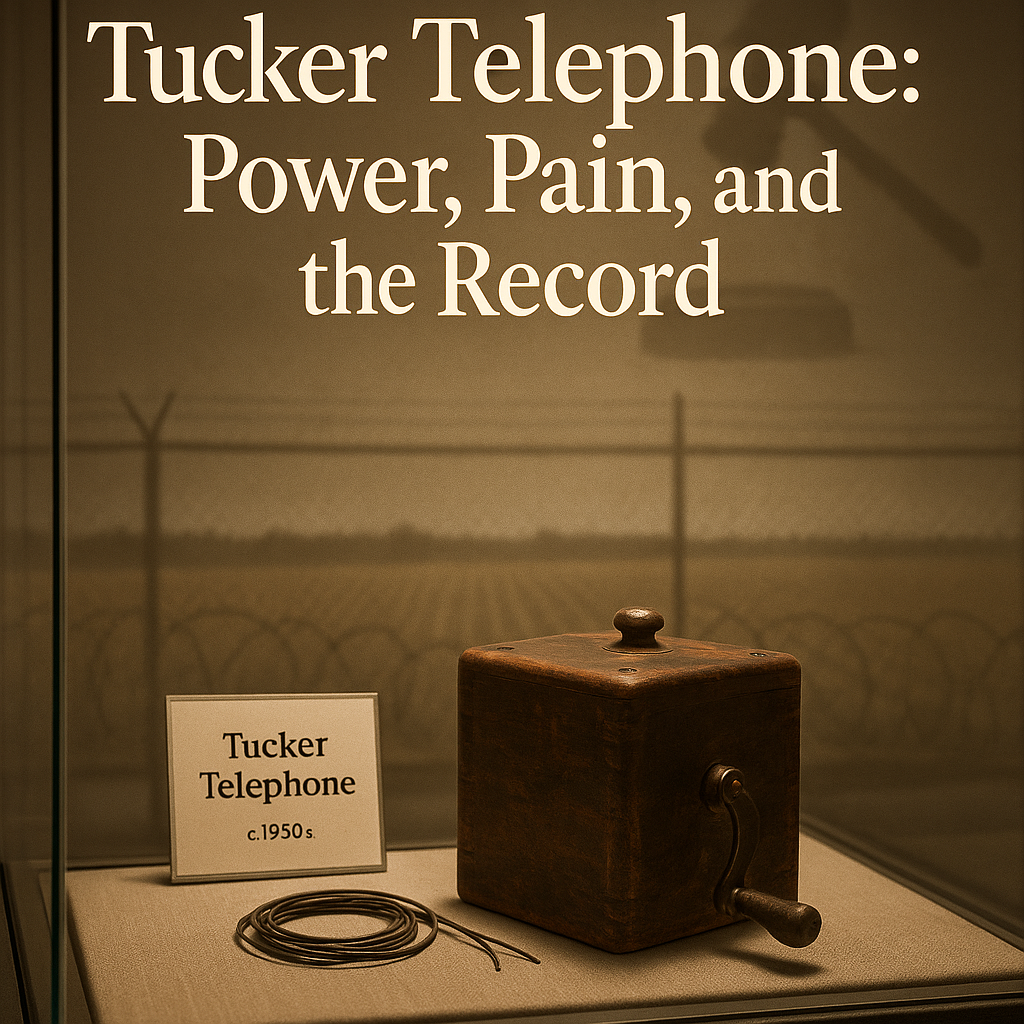
Inside Arkansas’s farm prisons, a simple hand-crank box carried a quiet kind of power. This documentary traces how the “Tucker Telephone” moved from a back room to the center of a statewide reckoning. We follow the workdays at Tucker, the trusty system, and the hospital corridor where pain was framed as routine. Then the story widens: a governor releases findings, cameras arrive at Cummins in January nineteen sixty-eight, and a reformer writes it all down.
From Jackson v. Bishop in December nineteen sixty-eight to Holt v. Sarver in February nineteen seventy, courts set a floor for dignity and safety. The rulings ended whipping, challenged open barracks and armed trusties, and forced written plans. Change showed up on paper first, then in training rooms, medical charts, and audits. The device faded into a file photo. Memory and oversight took its place.
This is a true crime story told as documentary. It leans on dates, lived voices, and plain facts. It asks what protects people when routine starts to drift. It closes with a charge that fits any system under pressure: keep records, keep names, keep watch.
Keywords: true crime stories, investigative storytelling, prison history, Arkansas prisons, documentary narratives, human dignity, Eighth Amendment.

What happens when the pursuit of justice becomes a performance? Shadows of Justice: The Dana Chandler Conviction is a gripping, emotionally immersive true crime...

This true-crime audiobook examines the verified events surrounding the killing of Jonathan Amerault, a young engineer whose disappearance unfolded through documented communications, controlled movements,...

When eleven women vanished from Albuquerque’s streets between 2001 and 2005, few noticed. They were young, mostly women of color, many sex workers, and...